1820 — 1893 · An interactive history

It began with a single verse.

In the winter of 1820, a fourteen-year-old farm boy read James 1:5 and decided to take it literally. Seventy-three years later, a granite temple rose in a desert valley a continent away. This is what happened in between.

Era I · 1820 – 1830 · New York & Pennsylvania

The Restoration

A revival-torn county in upstate New York. A family of farmers. A boy with a question no preacher could settle. The Restoration did not begin with an answer — it began with the decision to ask.

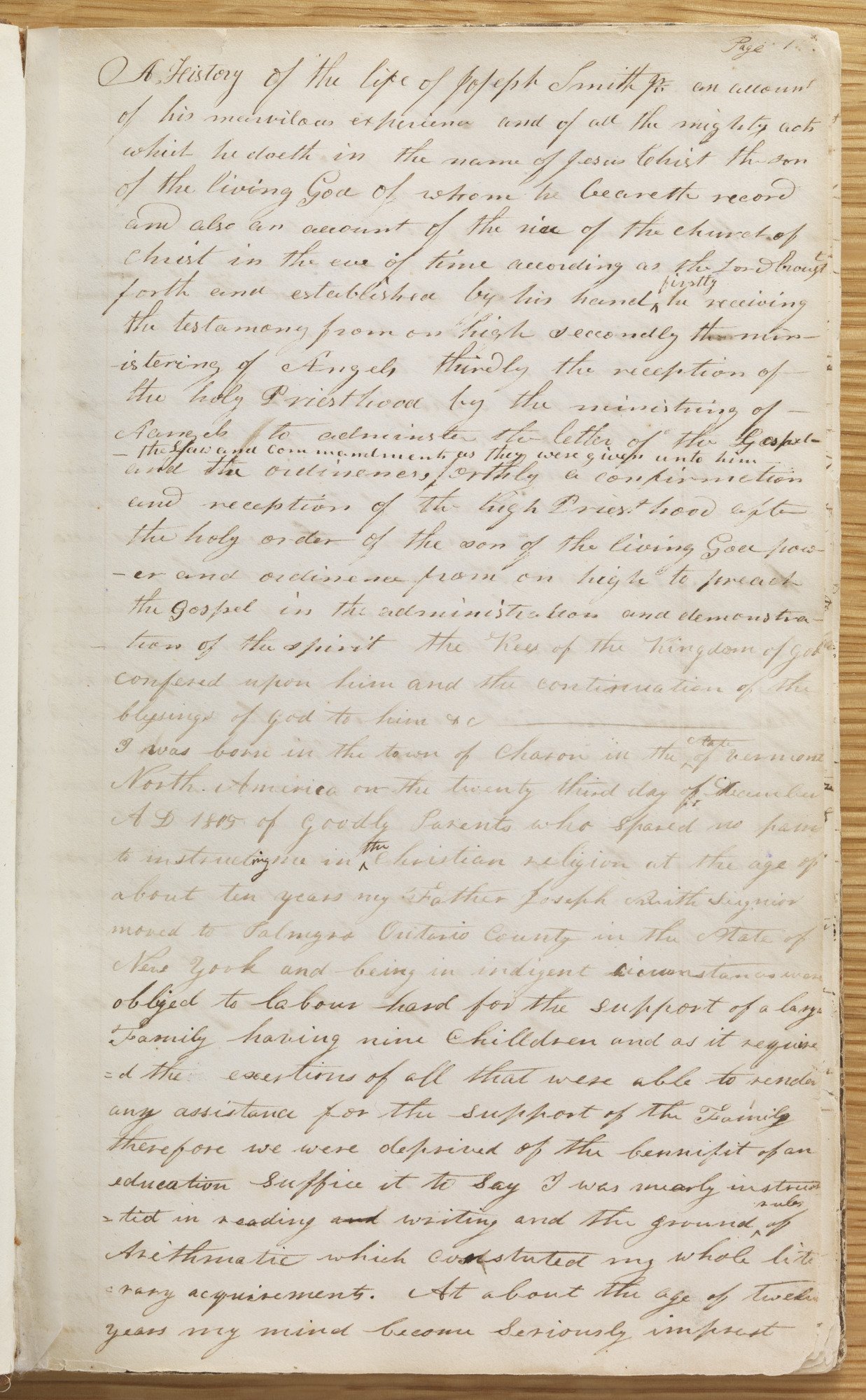
Manuscript page from Joseph Smith's circa 1832 history
Joseph Smith's earliest firsthand history. JSP

Winter 1819–20 · Palmyra, New York

“If any of you lack wisdom…”

Fourteen-year-old Joseph Smith, unsettled by the competing revivals sweeping the region, opens the family Bible to the Epistle of James — and one verse refuses to let him go.

Preachers in Palmyra were contending over which church was true, and Joseph — by his own account — could not settle the question by reasoning alone. The verse he found promised another way: “If any of you lack wisdom, let him ask of God… and it shall be given him.” He resolved to do exactly what it said.

“Never did any passage of scripture come with more power to the heart of man than this did at this time to mine. It seemed to enter with great force into every feeling of my heart.” — Joseph Smith, History 1:12
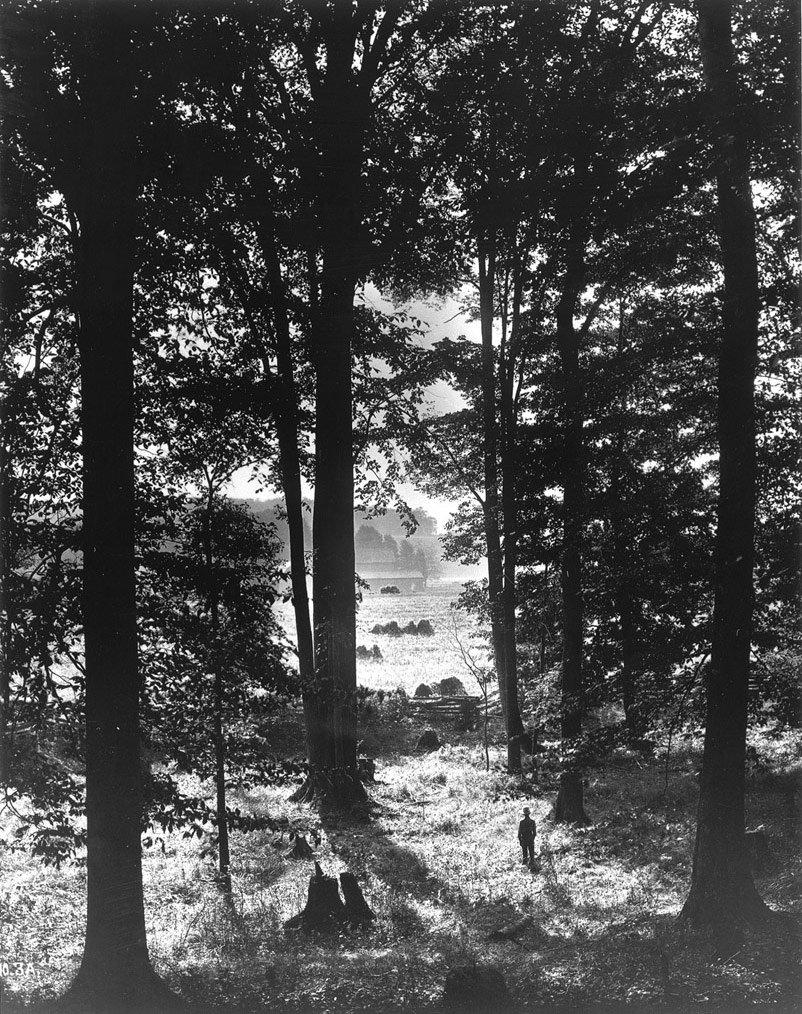
Black-and-white historical photograph of trees in the Sacred Grove
The Sacred Grove, photographed circa 1907. Source

Early spring 1820 · The Sacred Grove

The First Vision

On a clear morning, Joseph walks into the woods near his family’s farm, kneels down, and prays out loud for the first time in his life.

He described being seized first by a darkness so thick he thought he would be destroyed — and then by light: “a pillar of light exactly over my head, above the brightness of the sun.” In it he saw two personages, the Father and the Son. To his question of which church to join, he was told to join none of them.

“This is My Beloved Son. Hear Him!” — Joseph Smith, History 1:17
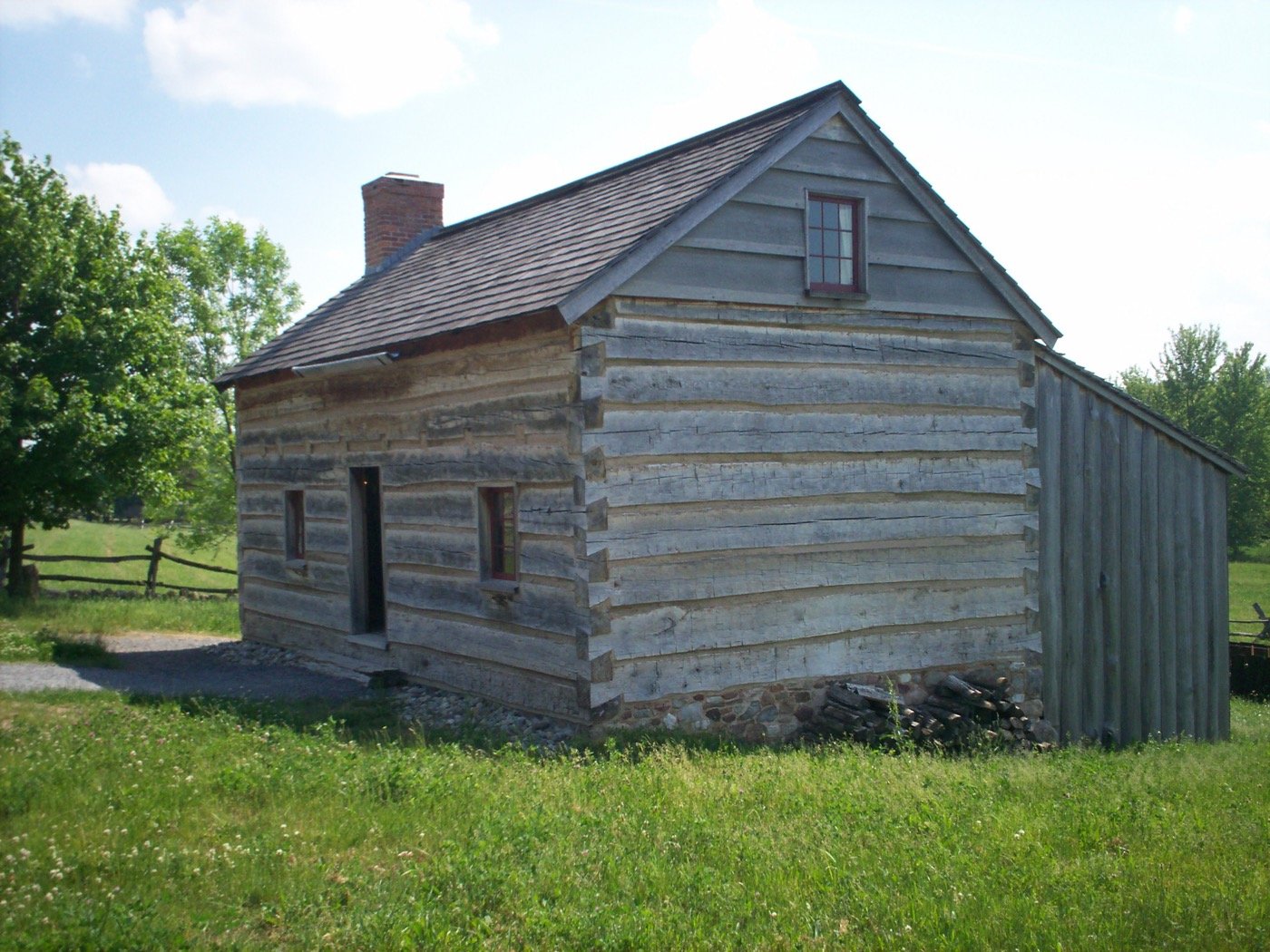
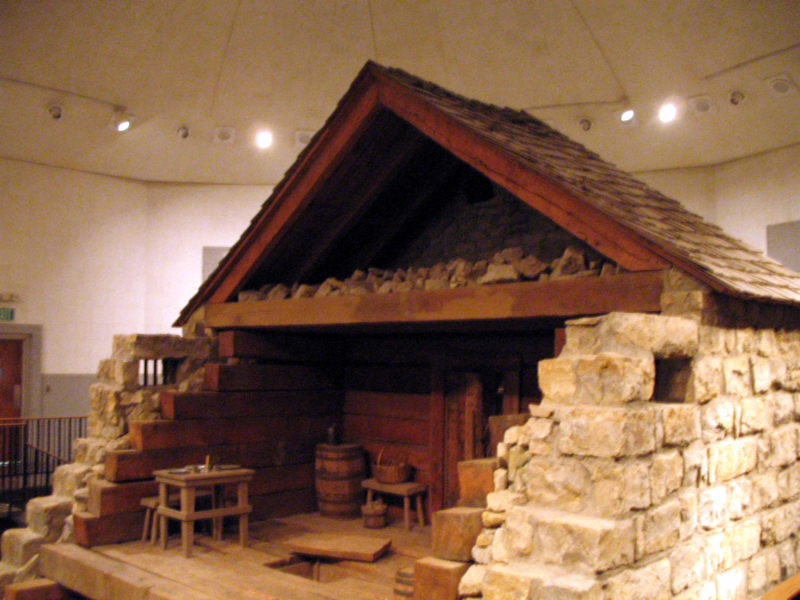
Reconstructed Smith family log home in Manchester, New York
Reconstructed Smith family log home. Source

September 21–22, 1823 · Smith log home, Manchester

A messenger named Moroni

Praying at night for forgiveness and direction, seventeen-year-old Joseph is visited three times before dawn by an angel who tells of an ancient record, engraved on gold plates and buried in a hill nearby.

The messenger named himself Moroni, quoted Malachi and Isaiah, and repeated the entire message three times through the night — then a fourth time the next day in a field, telling Joseph to tell his father. Joseph found the plates in the hill that afternoon but was not permitted to take them. Instead came four years of annual visits and instruction: a farm boy’s apprenticeship.

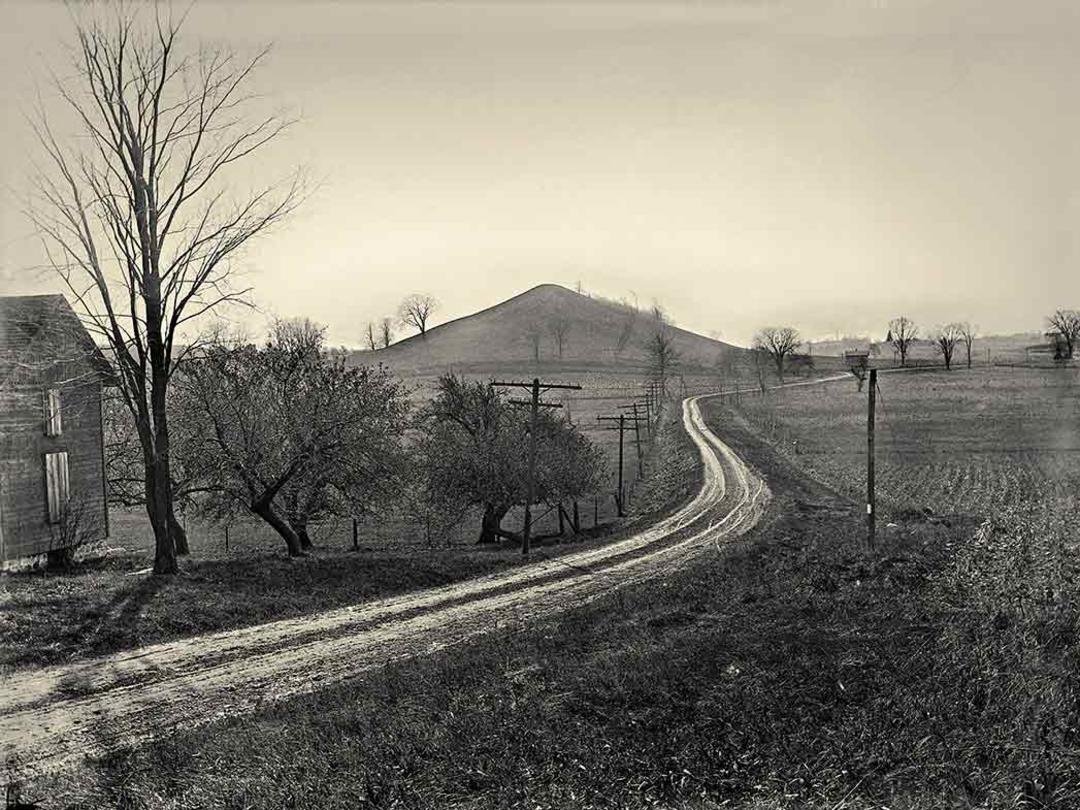
Historic photograph of Hill Cumorah in western New York
Hill Cumorah, the hill associated with the plates. Source

September 22, 1827 · Hill Cumorah

The plates come home

After four years of preparation, Joseph — now twenty-one and newly married to Emma Hale — is finally entrusted with the record, along with the interpreters called the Urim and Thummim.

Word spread quickly, and repeated attempts were made to steal the plates — a fence rail ambush, ransacked cabinets, a torn-up floor. To find peace enough to work, Joseph and Emma moved a hundred miles south to her family’s land in Harmony, Pennsylvania, where the translation could finally begin.

April – June 1829 · Harmony, Pennsylvania

Sixty-five working days

With schoolteacher Oliver Cowdery writing at his dictation, Joseph translates the bulk of the Book of Mormon in roughly sixty-five working days — well over two hundred and fifty thousand words, at a pace of seven to eight pages a day.

Emma, who also served as scribe, later described her husband dictating hour after hour and — after meals or interruptions — beginning again “where he had left off, without either seeing the manuscript or having any portion of it read to him.”

“These were days never to be forgotten — to sit under the sound of a voice dictated by the inspiration of heaven.” — Oliver Cowdery, 1834

May 15, 1829 · Banks of the Susquehanna

The priesthood restored

Translating the account of the Savior’s ministry raises an urgent question: who has the authority to baptize? Joseph and Oliver walk into the woods to ask — and record that a resurrected John the Baptist laid hands on their heads.

Given the Aaronic Priesthood, they baptized each other in the Susquehanna River that same day. Weeks later, they testified, the ancient apostles Peter, James, and John conferred the Melchizedek Priesthood — the same authority, Latter-day Saints believe, that Christ gave his original Twelve.

June 1829 · Fayette, New York

Eleven witnesses

Three men testify that an angel showed them the plates and that the voice of God declared the translation true; eight more lift, turn, and examine the record with their own hands.

All eleven allowed their names to be printed in every copy of the book. Several later broke with Joseph Smith — some bitterly — yet none of them ever denied what he had signed his name to.

“I have never at any time denied that testimony or any part thereof.” — David Whitmer, final testimony, 1887
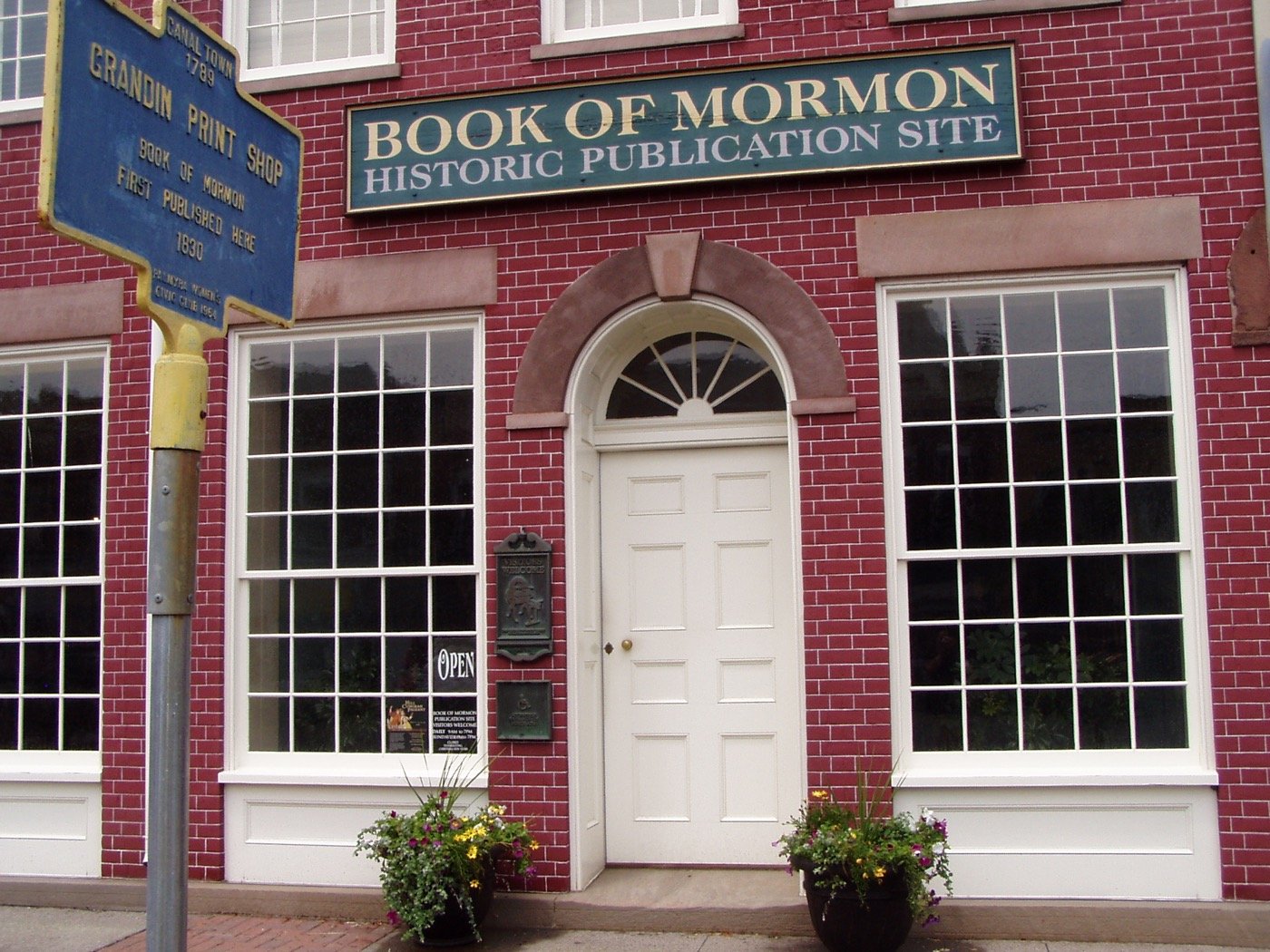
Facade of the restored E. B. Grandin print shop in Palmyra
E. B. Grandin print shop, Palmyra. Source

March 26, 1830 · Palmyra, New York

The book goes on sale

Five thousand copies of the Book of Mormon come off E. B. Grandin’s press — financed by farmer Martin Harris, who mortgaged and ultimately sold 151 acres of his farm to pay the bill.

The title page states the book’s purpose in one line: the convincing of Jew and Gentile “that Jesus is the Christ, the Eternal God, manifesting himself unto all nations.” It has since been published in the hundreds of millions, in more than a hundred languages.

Reconstructed early Latter-day Saint log home in western New York
A reconstructed log home from the New York restoration sites. Source

April 6, 1830 · Whitmer farmhouse, Fayette

A church of six

In a log home packed with some sixty believers, the Church of Christ is formally organized with six incorporators, as New York law required. Joseph Smith is twenty-four years old.

The sacrament was administered, believers were confirmed, and baptisms followed in a nearby stream. The church that would one day fill a desert valley — and count millions of members on every continent — numbered exactly six members on paper.

Era II · 1831 – 1839 · Ohio & Missouri

The Gathering

Revelation called the scattered converts to gather — first to Ohio, then to Missouri. What followed was a decade of temples and mobs, pentecost and exile, and a governor’s order that a whole people be driven from his state.

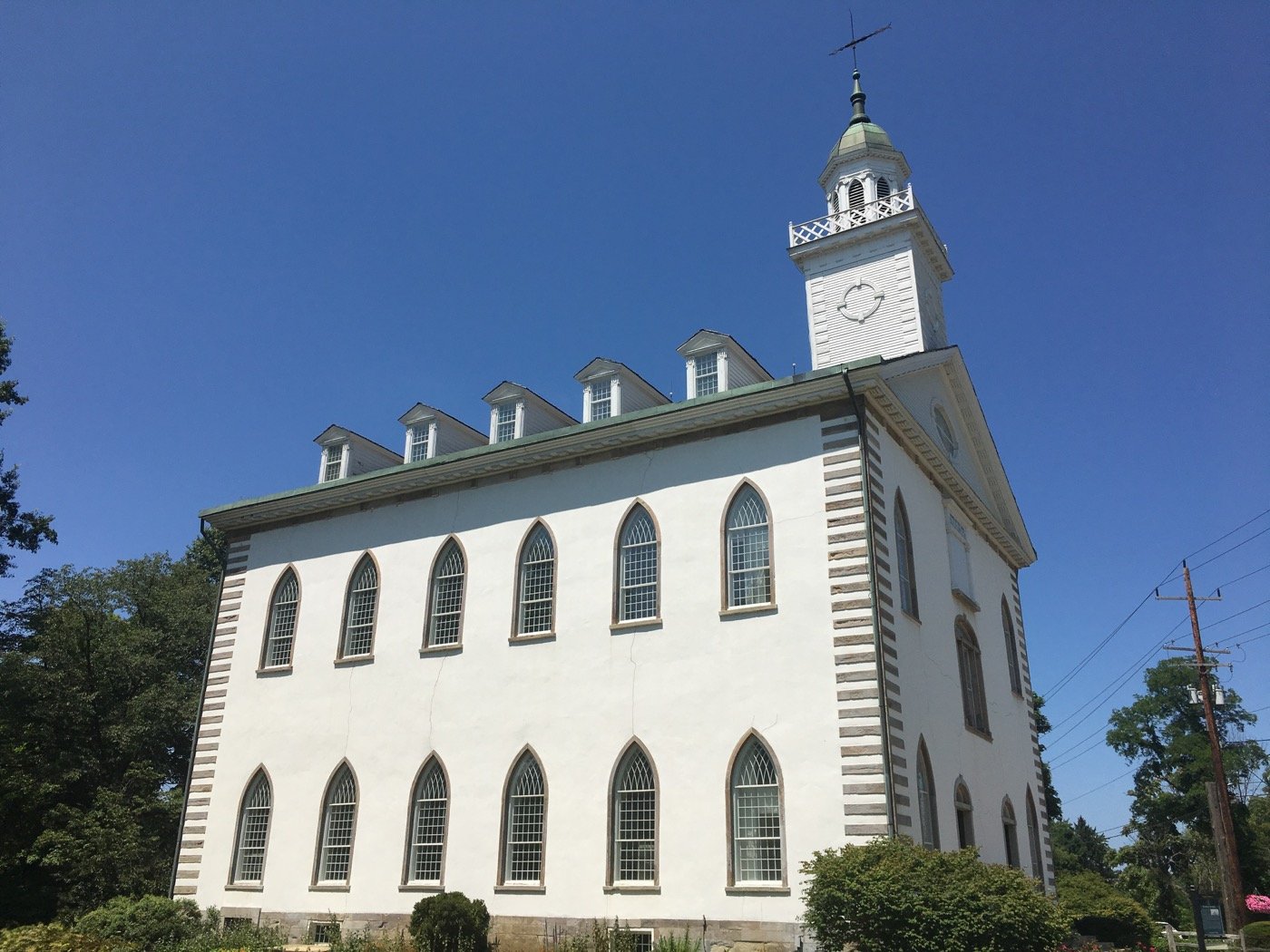
Exterior photograph of the Kirtland Temple in Ohio
Kirtland Temple, Ohio. Source

February 1831 · Kirtland, Ohio

Gathering to Ohio

Joseph arrives in Kirtland by sleigh to find hundreds of new converts already waiting. For seven years this small Ohio town is the heart of the church — and the site of its first temple.

A December 1830 revelation had said simply: “ye should go to the Ohio.” Converts poured in faster than the town could house them. In Kirtland the church gained a First Presidency, a Quorum of Twelve Apostles, and most of the revelations now printed in the Doctrine and Covenants.

July 1831 · Independence, Missouri

Zion designated

Revelation names Jackson County, Missouri as the site of Zion — the New Jerusalem — and Saints begin gathering to two centers nearly a thousand miles apart.

Within two years, older settlers — alarmed at the flood of northern newcomers who voted together and opposed slavery — destroyed the church’s printing office, tarred and feathered its leaders, and drove twelve hundred Saints from the county at gunpoint. It was a preview of the decade to come.

Kirtland Temple exterior with white walls and tower
The first temple built by the early Saints. Source

March 27, 1836 · Kirtland, Ohio

The first temple dedicated

Three years of sacrifice — quarried sandstone, and plaster mixed with crushed glassware so the walls would shimmer — produce the Restoration’s first temple. A thousand voices sing “The Spirit of God” for the first time at its dedication.

The Saints were poor and few, and the building consumed nearly everything they had. Witnesses of the dedication week described speaking in tongues, visions of angels, and a sound like a rushing mighty wind — they called it a latter-day Pentecost.

Kirtland Temple in Ohio, site associated with Doctrine and Covenants 110
Kirtland Temple; D&C 110 manuscript context at JSP

April 3, 1836 · Kirtland Temple

Behind the veil

A week later, on Easter Sunday, Joseph Smith and Oliver Cowdery record that the Savior appeared in the temple to accept it — followed by Moses, Elias, and Elijah, each restoring keys of priesthood authority.

Elijah’s return answered Malachi’s ancient promise — that hearts of the children would turn to their fathers. Latter-day Saints trace their worldwide work of family history and temple worship to this single spring afternoon.

“I have accepted this house… and I will manifest myself to my people in mercy in this house.” — Doctrine & Covenants 110:7

October 27, 1838 · Far West, Missouri

The Extermination Order

Tension between old settlers and gathering Saints collapses into open conflict. Governor Lilburn Boggs signs Executive Order 44: the Mormons “must be treated as enemies, and must be exterminated or driven from the State.”

Three days later a militia unit attacked the small settlement at Haun’s Mill, killing seventeen men and boys. That winter, as many as ten thousand Saints abandoned Missouri for Illinois, most on foot. The order remained on Missouri’s books until 1976, when it was formally rescinded with an apology.

Partial reconstruction of Liberty Jail
Liberty Jail reconstruction; the March 1839 letter is at JSP

Winter 1838–39 · Liberty Jail, Missouri

A prison-temple

Betrayed, arrested, and held without trial, Joseph spends four months in the dungeon of Liberty Jail — stone walls four feet thick, a ceiling too low to stand under. From that pit come some of the Restoration’s most-loved words.

His letters from the jail — part anguish, part revelation — were later canonized. To the cry “O God, where art thou?” came the answer that generations of Latter-day Saints have carried through their own winters:

“My son, peace be unto thy soul; thine adversity and thine afflictions shall be but a small moment.” — Doctrine & Covenants 121:7

Era III · 1839 – 1846 · Illinois

Nauvoo, the Beautiful

On a malarial bend of the Mississippi, refugees built one of the largest cities in Illinois — and lost the man who built it. Nauvoo is the Restoration’s high noon, and its darkest afternoon.

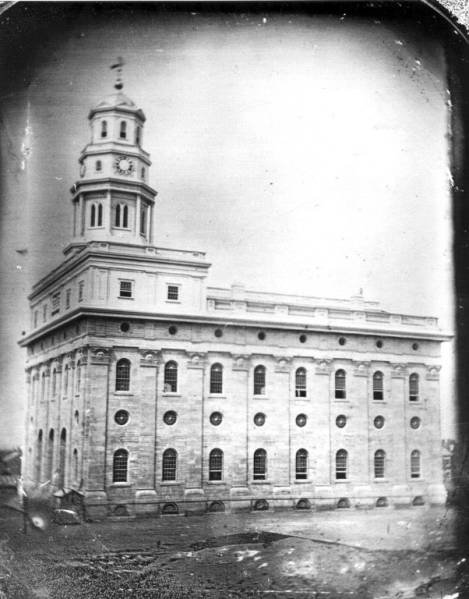
Historic daguerreotype photograph of the original Nauvoo Temple
Original Nauvoo Temple, photographed circa 1847. Source

Spring 1839 · Commerce, Illinois

A city from a swamp

Escaped from Missouri custody, Joseph buys a fever-ridden riverbend that, he said, no sensible man would settle — and names it Nauvoo, from a Hebrew word for beautiful. Within five years it rivals Chicago in size.

The swamp was drained, streets were platted, and converts arrived by the boatload — thousands of them from the apostles’ missions in England, many too poor to bring more than a trunk. By 1845 Nauvoo held roughly twelve thousand people.

March 17, 1842 · Red Brick Store, Nauvoo

The Relief Society

Twenty women meet in the room above Joseph’s store and organize the Female Relief Society of Nauvoo, with Emma Smith as its first president — today among the oldest and largest women’s organizations in the world.

“We are going to do something extraordinary… we expect extraordinary occasions and pressing calls.” — Emma Smith, first meeting of the Relief Society
Daguerreotype of the original Nauvoo Temple
The original Nauvoo Temple. Source

1841 – 1845 · The bluff above the river

A temple rising

Even as poverty and persecution deepen, the Saints raise a gleaming limestone temple above the Mississippi. Here Joseph introduces the endowment and the sealing of families — the heart of Latter-day Saint temple worship ever since.

Baptism for the dead had been taught in 1840; the first endowments were given in the upper room of the Red Brick Store in May 1842, before the temple walls were shoulder high. The doctrine was audacious: that family bonds, sealed by priesthood authority, could outlast death itself.

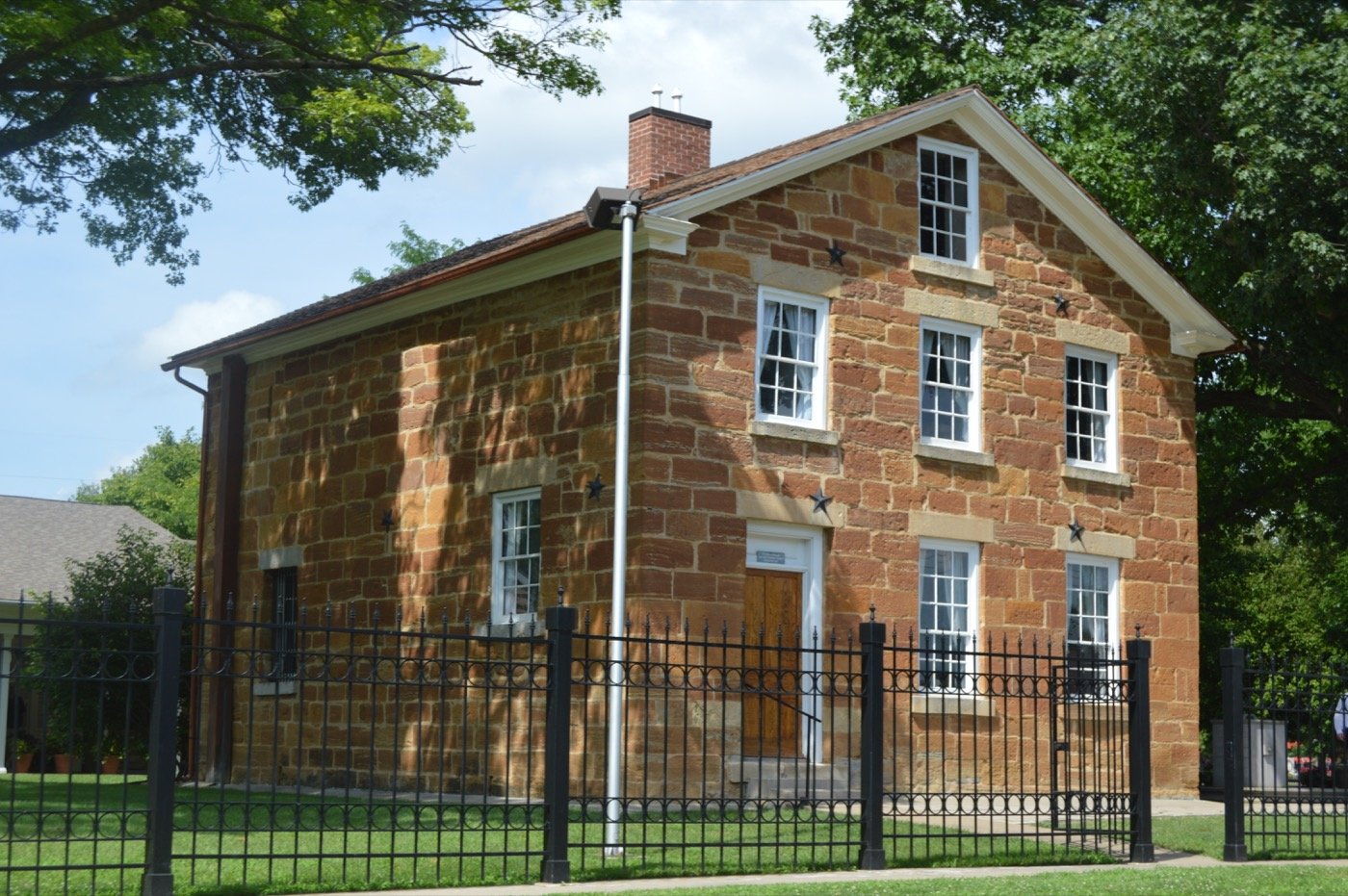
Exterior of Carthage Jail in Illinois
Carthage Jail, Illinois. Source

June 27, 1844 · Carthage Jail, Illinois

The Martyrdom

Held on charges stemming from the destruction of a dissident newspaper, Joseph and his brother Hyrum are shot and killed by a mob of about a hundred and fifty men with blackened faces. Joseph is thirty-eight years old.

He had crossed the river to safety days earlier — and came back, saying that if his life was of no value to his friends, it was of none to himself. The governor had personally pledged the brothers’ protection.

“I am going like a lamb to the slaughter; but I am calm as a summer’s morning; I have a conscience void of offense towards God, and towards all men.” — Doctrine & Covenants 135:4
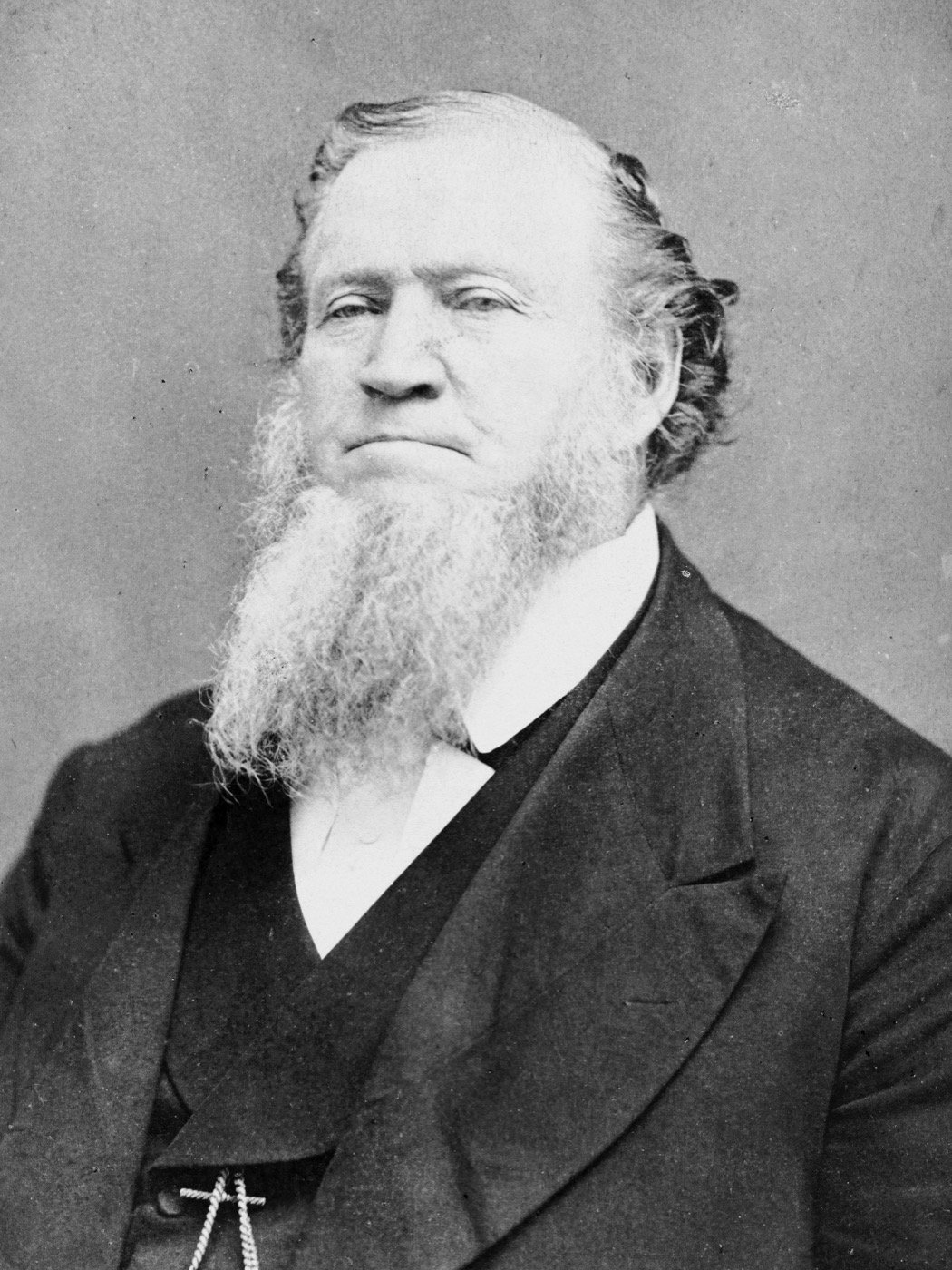
Portrait of Brigham Young
Brigham Young, photographed circa 1865. Source

August 8, 1844 · Nauvoo

Who leads now?

With the founder dead, thousands gather in the grove east of the temple to settle the succession. The body of the church sustains Brigham Young and the Quorum of the Twelve Apostles to lead it.

Many present recorded — some at the time, more in later years — that as Brigham spoke he seemed for a moment to carry Joseph’s voice and bearing. Not everyone followed the Twelve; smaller groups gathered around other claimants. But the great body of the Saints, and the road west, went with Brigham.

C. C. A. Christensen painting of Latter-day Saints at Winter Quarters
C. C. A. Christensen's Winter Quarters scene. Source

February 4, 1846 · The Mississippi River

The exodus begins

The first wagons ferry across the Mississippi into the Iowa mud and snow; later companies cross on the ice itself. Behind them, work crews keep finishing the temple in a city they are abandoning.

The Nauvoo Temple was dedicated that spring — completed, used for a season of ordinances, and then left behind. The Saints had covenanted to see it finished, and they kept the covenant on their way out the door. Arsonists burned it in 1848.

Era IV · 1846 – 1893 · The Trail & the Great Basin

The Desert & the Temple

A thousand miles of prairie, a valley nobody else wanted, and a granite temple forty years in the raising. The question a boy carried into a grove of trees is answered, at last, in stone.

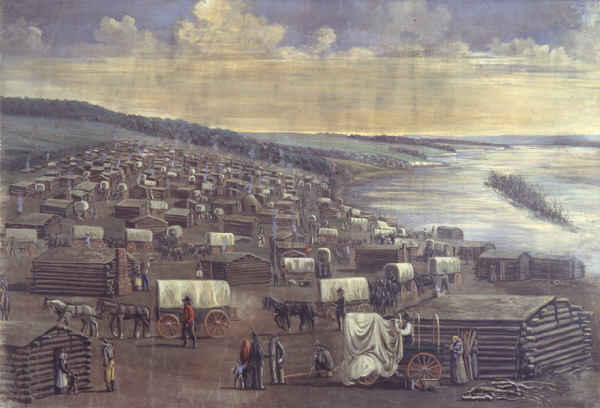
Painting of the Saints' Winter Quarters settlement
Winter Quarters, painted by C. C. A. Christensen. Source

Winter 1846–47 · Winter Quarters, on the Missouri

“All is well”

Some 3,500 Saints winter in hastily built cabins and dugouts on the Missouri River; hundreds die of scurvy and fever. On the trail that spring, William Clayton had written the anthem of the whole migration: “Come, Come, Ye Saints.”

Clayton composed it in April 1846 on receiving word that his wife, far behind in Nauvoo, had safely delivered a son. Its last verse looks death in the eye without blinking:

“And should we die before our journey’s through — happy day! All is well.” — William Clayton, “Come, Come, Ye Saints,” 1846
Portrait of Brigham Young
Brigham Young, photographed circa 1865. Source

July 24, 1847 · Mouth of Emigration Canyon

“This is the right place”

Brigham Young, weak with tick fever, rises from his sickbed in Wilford Woodruff’s carriage, looks out over the empty Salt Lake Valley, and says: “It is enough. This is the right place. Drive on.”

The advance company had entered the valley two days earlier and was already plowing. Within hours of arriving, the pioneers dammed City Creek to soften the baked ground and planted potatoes — irrigation before shelter, five weeks’ food supply from home.

Brigham Young portrait
Brigham Young, photographed circa 1865. Source

July 28, 1847 · Between the forks of City Creek

A cane in the sagebrush

Four days into the valley, Brigham walks the ground with the apostles, strikes his cane into the earth, and says: “Here we will build a temple to our God.”

A ten-acre temple block was platted on the spot, and the entire city was laid out from it — every street numbered by its distance from the temple corner. Salt Lake City addresses still work that way today.

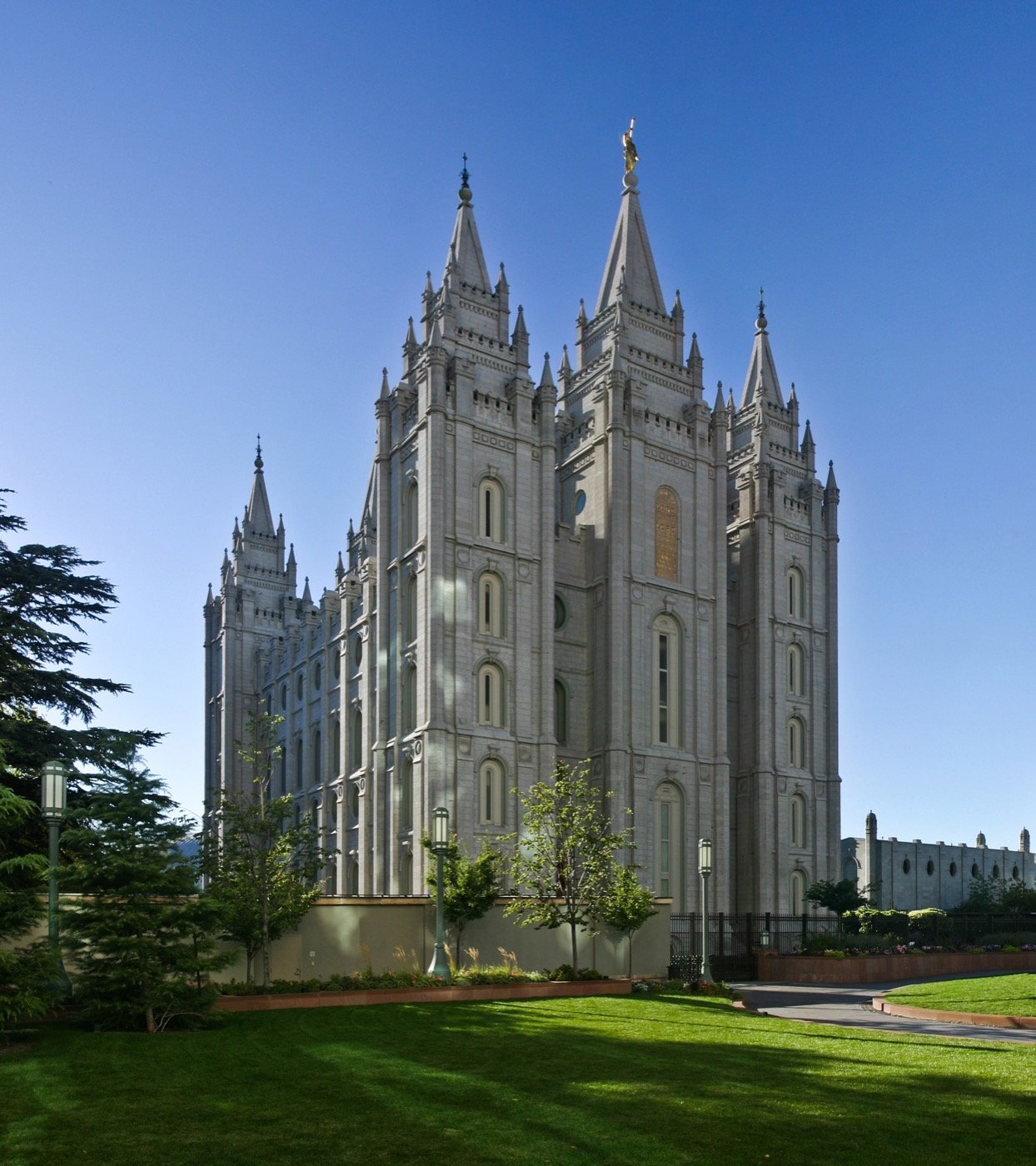
Salt Lake Temple exterior
Salt Lake Temple, completed after forty years. Source

April 6, 1853 · Temple Block, Salt Lake City

Cornerstones in granite

Six years after entering the valley — still poor, still at the edge of the map — the Saints lay the cornerstones of the Salt Lake Temple. Ox teams will haul granite blocks from Little Cottonwood Canyon, twenty miles away, one wagon at a time.

Brigham wanted a building that would stand through the Millennium. When cracks appeared in the sandstone footings, he ordered them torn out and replaced with granite. He would not live to see the walls reach half their height — he died in 1877, twenty-six years before the temple was finished.

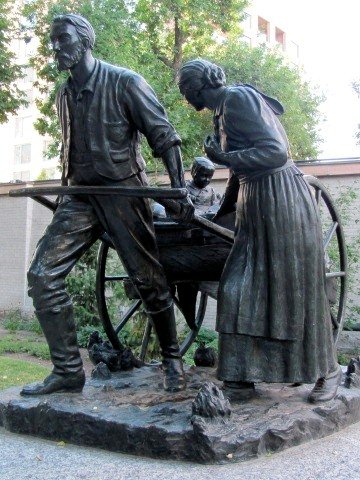
Bronze sculpture of a handcart pioneer family
Handcart Pioneer Monument, Salt Lake City. Source

October 1856 · The high plains of Wyoming

The rescue

Two late-starting handcart companies — Willie and Martin, nearly a thousand emigrants pulling their belongings by hand — are trapped by early blizzards. Brigham Young halts October conference: “Go and bring in those people now on the plains.”

Rescue wagons left the valley within days. More than two hundred died on the trail; hundreds more were carried in frostbitten and alive. Of roughly seventy thousand pioneers who crossed the plains before the railroad came in 1869, most walked.

“The price we paid to become acquainted with God was a privilege to pay.” — attributed to Francis Webster, Martin Handcart Company
Salt Lake Temple exterior
Salt Lake Temple, completed after forty years. Source

April 6, 1892 · Temple Square

The capstone

Forty thousand people fill Temple Square to watch Wilford Woodruff press an electric button that sets the capstone on the highest spire. The gilded figure of the angel Moroni is raised the same day, and the crowd erupts in the Hosanna Shout.

Woodruff then challenged the Saints to finish the interior in a single year — after thirty-nine years on the walls alone — so the temple could be dedicated forty years to the day from its cornerstones. They did it.

Salt Lake Temple in Salt Lake City
Salt Lake Temple, dedicated April 6, 1893. Source

April 6, 1893 · Salt Lake Temple

The house finished

Forty years to the day after the cornerstones were laid, Wilford Woodruff — who had driven the carriage Brigham Young rose from to see the valley — dedicates the Salt Lake Temple. Some 75,000 Saints attend the dedicatory sessions over the following weeks.

Woodruff had joined the church in 1833, carried the Missouri exile, the Nauvoo exodus, and the plains in his own body, and outlived nearly everyone who had started the walls. The question asked over an open Bible in 1820 — ask of God — had become a house of God in granite, built by the people who believed the answer.

Keep going

The story didn’t end in 1893.

What this history means — and the hard questions it raises — is exactly what the channel is for. Come ask them with us.